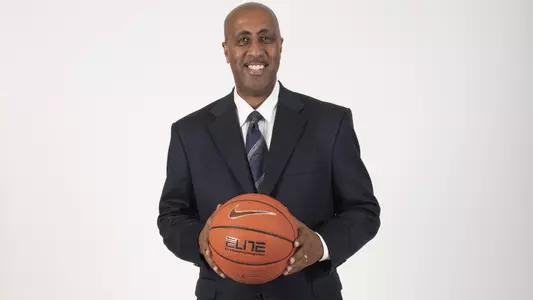
Photo by: Ron Hall
Blog: Why the Waves Will Love Lorenzo Romar
11/2/2018 12:24:00 PM | Men's Basketball, Competing With Purpose Blog
Brad Butcher, who holds both bachelor's and master's degrees from the University of Washington, was a student manager for the Huskies' men's basketball program when Lorenzo Romar was the head coach there. He wanted to write to Waves fans to let them know about their new head coach, and this is what he sent:
"You didn't have to do that." What's better: Having that phrase said to you, or being able to say it to someone else? I don't think there's a right answer. Either way, both parties are clearly better off whenever this phrase is spoken.
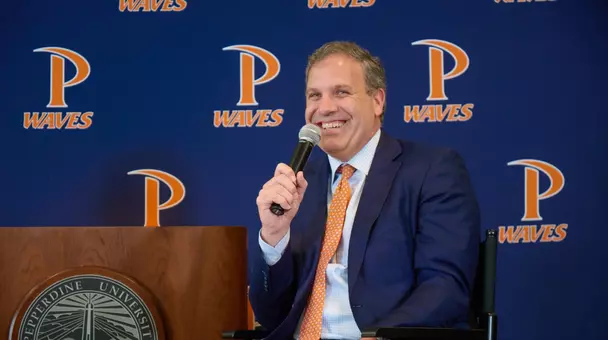
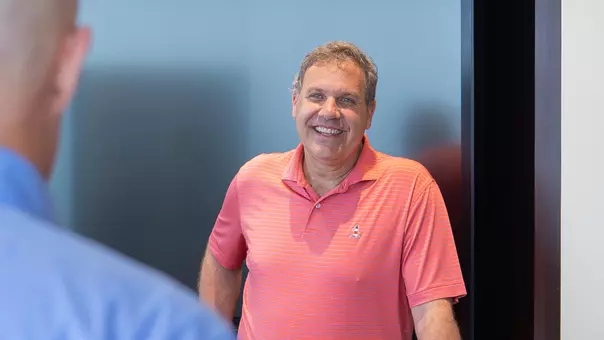
Lorenzo Romar, head coach of the Pepperdine University men's basketball program, is someone that I imagine hears the phrase quite often – and for good reason. I think the world of Coach Romar and you should, too. Hopefully after reading this, you can understand why.
My name is Brad Butcher and I worked with Coach Romar for three years while he headed up the University of Washington men's basketball program. During my time as a team manager (2012-14) and graduate assistant (2014-15), I wiped up sweat, rebounded tens of thousands of shots and traveled with the team while juggling studies.
I was around Coach Lorenzo Romar a lot. In all my hours around him, I never heard him utter anything resembling a curse word. We're not talking F-bombs here. I'm saying I never once even heard him say "Damn" or "H-E-double hockey sticks." In THREE years, coaching teenagers, in an arena where fiery words are all too common, he never once went that route. The closest? "Doggonit" – hardly a qualifier. He didn't have to do that.
While I ended up working with the program for three years, that very nearly wasn't the case. After my first year of being a team manager, I decided I wouldn't return for a second. Somehow, Coach Romar caught wind of my intentions, and pulled me aside during one of our spring workouts. In our talk, he told me that every single person is important in a team, no matter your role, and just wanted me to know that he wanted me back with the team next year – but that I should ultimately make any decision with my own best interests in mind.
Remember: my role was to literally wipe up sweat, fill water bottles and rebound. It was the definition of a replaceable role. At the time, he was in his 12th year with the program and arguably the most accomplished basketball coach in the history of the university. I took some time to think it over.
A few days later, I met privately with Coach Romar, and let him know I would be returning to the team. Upon hearing the news, he sprung up out of his chair and gave me a big bear hug. It made me feel like I was a five-star recruit that he'd been waiting for a commitment from, rather than the water boy that I was. He didn't have to do that.
Just a few weeks later, he asked the managers to come to the gym at 7 a.m. for a spring workout. No problem, coach. We showed up early, only to find the gym doors locked and no players around. At 7 o'clock sharp, Romar let us know there wasn't any workout, and that he was taking us all to a famed Seattle breakfast spot – Portage Bay Café – which had his favorite breakfast delicacy, Bananas Foster. Again, he didn't have to do that.
The following year, we had an off-day from practice, when I received a phone call from my older sister, who was distraught, having just been rear-ended by someone. The person who hit her wouldn't exchange insurance information, instead insisting that they meet up in-person later that evening to sort things out. I didn't know what to tell her but figured asking for advice from others couldn't hurt. I happened to be in the basketball arena at the time and Coach Romar was the only one around. I explained the situation to him and he immediately picked up the phone to call a friend – a Seattle police chief – to see what should be done. He passed along the recommendations and asked that I accompany my sister and have his number ready if the situation didn't feel right. Oddly enough, the situation resolved itself and the insurance information was sent over soon after, so the in-person meeting ended up not even happening.
The next day, I arrived at practice to see the entire coaching staff having a pre-practice meeting. Right when Coach Romar saw me walk in, he stopped the meeting and ran (legitimately hustled) across the gym to talk to me. He asked how things went with my sister's situation. I assured him that everything was good, and he was visibly relieved. I appreciated that – it was genuine concern.
Once again, he didn't have to do that. In fact, he didn't have to do any of that – but he did. If he regularly did these types of things for someone like me that could do almost nothing to move the needle for him or his team, I have to believe that it's just the type of person that he is. I'm confident that the Pepperdine Waves made a great coaching selection and are poised to do very well on and off the court in the coming years.
"You didn't have to do that." What's better: Having that phrase said to you, or being able to say it to someone else? I don't think there's a right answer. Either way, both parties are clearly better off whenever this phrase is spoken.
Lorenzo Romar, head coach of the Pepperdine University men's basketball program, is someone that I imagine hears the phrase quite often – and for good reason. I think the world of Coach Romar and you should, too. Hopefully after reading this, you can understand why.
My name is Brad Butcher and I worked with Coach Romar for three years while he headed up the University of Washington men's basketball program. During my time as a team manager (2012-14) and graduate assistant (2014-15), I wiped up sweat, rebounded tens of thousands of shots and traveled with the team while juggling studies.
I was around Coach Lorenzo Romar a lot. In all my hours around him, I never heard him utter anything resembling a curse word. We're not talking F-bombs here. I'm saying I never once even heard him say "Damn" or "H-E-double hockey sticks." In THREE years, coaching teenagers, in an arena where fiery words are all too common, he never once went that route. The closest? "Doggonit" – hardly a qualifier. He didn't have to do that.
While I ended up working with the program for three years, that very nearly wasn't the case. After my first year of being a team manager, I decided I wouldn't return for a second. Somehow, Coach Romar caught wind of my intentions, and pulled me aside during one of our spring workouts. In our talk, he told me that every single person is important in a team, no matter your role, and just wanted me to know that he wanted me back with the team next year – but that I should ultimately make any decision with my own best interests in mind.
Remember: my role was to literally wipe up sweat, fill water bottles and rebound. It was the definition of a replaceable role. At the time, he was in his 12th year with the program and arguably the most accomplished basketball coach in the history of the university. I took some time to think it over.
A few days later, I met privately with Coach Romar, and let him know I would be returning to the team. Upon hearing the news, he sprung up out of his chair and gave me a big bear hug. It made me feel like I was a five-star recruit that he'd been waiting for a commitment from, rather than the water boy that I was. He didn't have to do that.
Just a few weeks later, he asked the managers to come to the gym at 7 a.m. for a spring workout. No problem, coach. We showed up early, only to find the gym doors locked and no players around. At 7 o'clock sharp, Romar let us know there wasn't any workout, and that he was taking us all to a famed Seattle breakfast spot – Portage Bay Café – which had his favorite breakfast delicacy, Bananas Foster. Again, he didn't have to do that.
The following year, we had an off-day from practice, when I received a phone call from my older sister, who was distraught, having just been rear-ended by someone. The person who hit her wouldn't exchange insurance information, instead insisting that they meet up in-person later that evening to sort things out. I didn't know what to tell her but figured asking for advice from others couldn't hurt. I happened to be in the basketball arena at the time and Coach Romar was the only one around. I explained the situation to him and he immediately picked up the phone to call a friend – a Seattle police chief – to see what should be done. He passed along the recommendations and asked that I accompany my sister and have his number ready if the situation didn't feel right. Oddly enough, the situation resolved itself and the insurance information was sent over soon after, so the in-person meeting ended up not even happening.
The next day, I arrived at practice to see the entire coaching staff having a pre-practice meeting. Right when Coach Romar saw me walk in, he stopped the meeting and ran (legitimately hustled) across the gym to talk to me. He asked how things went with my sister's situation. I assured him that everything was good, and he was visibly relieved. I appreciated that – it was genuine concern.
Once again, he didn't have to do that. In fact, he didn't have to do any of that – but he did. If he regularly did these types of things for someone like me that could do almost nothing to move the needle for him or his team, I have to believe that it's just the type of person that he is. I'm confident that the Pepperdine Waves made a great coaching selection and are poised to do very well on and off the court in the coming years.