Robert Radnoti Featured in Pepperdine People
4/11/2008 12:00:00 AM | Cross Country
Written by Megan Huard
Pepperdine People / Spring 2008 issue
Chemical engineering is an unusual pedigree for a cross country and track coach. But then again, Robert Radnoti isn’t your average coach.
Armed with nearly two decades of high-level engineering experience and an MBA from UCLA, Radnoti brings a new, business-minded, and strategic focus to the Pepperdine cross country and track programs.
“I’ve negotiated permits for oil-field facilities, conducted air pollution research, and lobbied for the Clean Air Act in Washington, D.C.,” he says. “None of it--and I mean none of it--is harder than coaching.”
Before switching careers, Radnoti spent 18 years as a facilities and environmental engineer with the Exxon Corporation. In 1989 disaster struck. In addition to its catastrophic effect on the environment, the Exxon Valdez oil spill cost the mammoth corporation $5 billion. Executives commissioned a group to create a system to ensure that Exxon would never suffer such a financial loss again. Radnoti was part of that group.
The team utilized a new theory of problem-solving known as systems thinking, developed by Dr. Peter Senge and made famous in his book The Fifth Discipline. From their work emerged Exxon’s Operations Integrity Management System designed to eliminate human error.
Since assuming his role as head coach at Pepperdine in 2006, Radnoti has built and implemented a strategic plan for the University’s cross country and track programs based upon Exxon’s system. Known as the System of Excellence, the plan begins with a vision: “to be the best running program in the nation for high performance student-athletics committed to the highest standards of academic excellence and Christian values, where students are strengthened for lives of purpose, service, and leadership.”
The plan, which echoes the Pepperdine mission statement, incorporates 10 separate elements including leadership, athletes and recruiting, training and education, competitions, parents and alumni, compliance, and more. Each component features the five characteristics of a system: scope and objectives, procedures, responsible and accountable resources, verification and measurement, and a feedback mechanism.
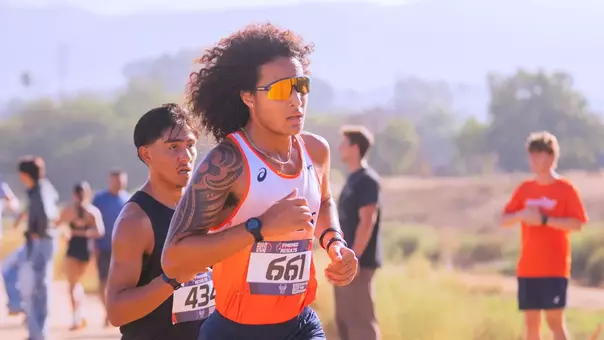
It sounds complex, but Radnoti’s runners get it. “We’re out to be the best team in the nation,” junior Brieanna Carroll simply states. “We’ve a ways to go, but I’ve no doubt that every single person has a mind towards being the best.”
For the Pepperdine teams, being the best also means being a little bit different. Radnoti believes a sports program takes on the coach’s personality, and offers his up in droves. His questionnaire for prospective student-athletes cheekily enquires whether the runner would prefer to attend college “just up from world-class beaches” or “in a cold, bitter climate;” whether he or she would prefer to train on “track overlooking the Pacific Ocean” or “concrete.” Radnoti hands recruits piles of random materials, then asks them to build their dream cross country course and pitch its construction to their peers.
“This is the same kind of stuff I did for corporate managers in oil fields,” he observes. “I like to be creative and have fun, but I also have business experience at very high levels; I know how to educate people and be precise in planning. My job here at Pepperdine is to accelerate the team’s progress to championship level and shorten the time frame to get there.”
He’s already taking larger steps than expected. This spring Pepperdine added a new men’s track program for distance runners. The team debuted in March at the West Coast Track Challenge. Radnoti also launched the annual Pepperdine Cross Country Invitational. In 2006, its inaugural year, only three or four schools competed so the coach got creative. He logged on to the go-to Web site for runners and advertised Pepperdine’s 2007 meet at “the most beautiful cross country course in the nation.” Immediately almost 100 teams registered, bringing nearly 2,000 runners with them to Malibu.
With a little ingenuity Radnoti propelled the modest invitational into a prestigious national event. “My focus is increasing the prominence of this program in the college world. With events like this, we’re doing it.” When asked if he’s surprised by such rapid progress, the coach just shrugs. “I envision my goals and expect them to happen. Sometimes they happen sooner than I expect.”
When it came to real professional satisfaction, however, the goal took half a lifetime to crystallize. Radnoti’s parents fled the Hungarian Revolution in 1956 and settled in Las Vegas, Nevada. There, he remembers, “my kindergarten teacher taught me English.” As a high school cross country star he broke school records in all the distance races and went on to compete in two NCAA cross country championship events before earning his bachelor’s degree in chemical engineering from the University of Colorado.
Following graduation, he moved to California and began work with Exxon. During his time there, Radnoti coached the company team for the Corporate Cup Relays, a national track and field competition for large corporations. His Exxon runners were among the best in the country, and Radnoti sensed his calling. He approached Fred Newhouse, his Exxon colleague and an Olympic Gold Medalist in the men’s 4x400 meter relay. Radnoti asked him what it would take to become a college track coach.
“It’s difficult,” Newhouse cautioned, “but go coach a high school team and develop it into a nationally recognized program.” So that’s exactly what Radnoti did. Just weeks later the track and field coach at Thousand Oaks High School retired. Radnoti tendered his resignation at Exxon and accepted both the coaching position and its meager four-figure annual salary. “Luckily,” he says, “my wife thinks the same way I do.”
During his eight years at Thousand Oaks (during which time he worked as an consultant each morning before practice), Radnoti’s track and field teams compiled a 209-12 overall record; the cross country teams finished with a 416-17 mark in the tough county league. And sticking to plan, in 2005 he led the girls’ cross country team to its first-ever California Division I state championship. He attributes the victory not only to skill, but to attitude. “When we won we weren’t the best team in the state, but we sure thought we were.”
That year Pepperdine was preparing to launch a new women’s track program, and Radnoti jumped at the chance to come aboard as assistant coach. During the summer longtime head coach Dick Kampmann stepped down, and with his Exxon days a thing of the past, Radnoti became head coach of the cross country and women’s track teams at Pepperdine University.
When George Pepperdine College first opened its doors in 1937, the fledging school sponsored only three intercollegiate sports: baseball, basketball, and track and field. Although the program has experienced ups and downs over the years, Pepperdine runners improve each day under the guidance of Radnoti and assistant coach Melvin Jones, who trains the sprinters. Equipped with ready blocks, sprint sleds, and portable hurdles, the pair helps runners gain the confidence necessary to show great performances.
“The location and scenery is a pretty legitimate reason to run at Pepperdine,” says freshman cross country runner Seth Allison, “but I think the best thing would have to be the people. Our coaching staff is wonderful and the team is amazing. Everyone is personally committed to making themselves and the team better.”
No one more so than Radnoti. His “relentless pursuit of excellence” keeps his attention fixed on honing the system and envisioning new and better plans. “I often wake up and start my day at 2 or 3 a.m.,” he says with evidence of neither sarcasm nor caffeine. “In fact, I had this great idea at 3:40 this morning. Let me tell you about it.”